
Dipl.-Ing. Lucas Weber
Professorship for Evolutionary Data Management
Research associates
Address
Contact
Since April 2022 Lucas Weber has been a member of the research staff at our chair.
General Information and Interests
From classical signal processing to pattern recognition and machine learning in time series, I just love working with time series. My research covers different topics from Knowledge Discovery and Mining:
- Signal Processing
- Machine Learning and Pattern Recognition for time series
- Change Point Detection in sensor signals
- Applied Machine Learning
- Robust Machine Learning
- Knowledge Discovery in Industrial Datasets
My primary interest lies in applying machine learning and pattern recognition techniques to sensor signals and knowledge discovery in time series sets.
Publications
2025
- , :
From Similarities to Insights: Approaching Time Series Integration from a User Perspective
HILDA '25: Workshop on Human-In-the-Loop Data Analytics (Berlin, 22/06/2025 - 27/06/2025)
In: HILDA '25: Proceedings of the Workshop on Human-In-the-Loop Data Analytics, New York, NY: 2025
DOI: 10.1145/3736733.3736742
BibTeX: Download - , :
Relationship Discovery for Heterogeneous Time Series Integration: A Comparative Analysis for Industrial and Building Data
BTW2025 - Datenbanksysteme für Business, Technologie und We (Bamberg, 03/03/2025 - 07/03/2025)
In: BTW2025 - Datenbanksysteme für Business, Technologie und Web, Bonn: 2025
DOI: 10.18420/BTW2025-22
BibTeX: Download - , , , :
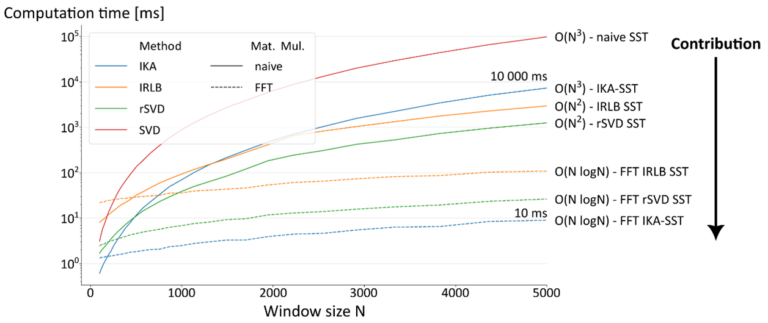
Accelerating Singular Spectrum Transformation for Scalable Change Point Detection
In: IEEE Access 13 (2025), p. 213556 - 213577
ISSN: 2169-3536
DOI: 10.1109/ACCESS.2025.3640386
BibTeX: Download
2023
- , :
Machine learning in sensor identification for industrial systems
In: it - Information Technology (2023)
ISSN: 1611-2776
DOI: 10.1515/itit-2023-0051
BibTeX: Download
2022
- , , , , , , , :
Evaluating Body Movement and Breathing Signals for Identification of Sleep/Wake States
International Conference on Applications in Electronics Pervading Industry, Environment and Society, APPLEPIES 2021 (Virtual, Online, 21/09/2021 - 22/09/2021)
In: Sergio Saponara, Alessandro De Gloria (ed.): Lecture Notes in Electrical Engineering 2022
DOI: 10.1007/978-3-030-95498-7_29
BibTeX: Download - , , , , , :
Involving the Disabled or People in Long-Term Care in Tourism Activities by the Use of Appropriate Technologies
German- Italian Workshop on Social Innovation in Long-Term Care through Digitalization, LTC 2021 (Ancona, 02/11/2021 - 04/11/2021)
In: Massimo Conti, Simone Orcioni (ed.): Lecture Notes in Bioengineering 2022
DOI: 10.1007/978-3-031-16855-0_10
BibTeX: Download - , , :
Democratizing Digital Health Algorithms: RESTful Machine Learning Web Services
German- Italian Workshop on Social Innovation in Long-Term Care through Digitalization, LTC 2021 (Ancona, ITA, 02/11/2021 - 04/11/2021)
In: Massimo Conti, Simone Orcioni (ed.): Lecture Notes in Bioengineering 2022
DOI: 10.1007/978-3-031-16855-0_2
BibTeX: Download
2021
- , , , , , , :
Design of a sleep apnoea detection system for a home environment
25th KES International Conference on Knowledge-Based and Intelligent Information and Engineering Systems, KES 2021 (Szczecin, 08/09/2021 - 10/09/2021)
In: Jaroslaw Watrobski, Wojciech Salabun, Carlos Toro, Cecilia Zanni-Merk, Robert J. Howlett, Lakhmi C. Jain, Lakhmi C. Jain (ed.): Procedia Computer Science 2021
DOI: 10.1016/j.procs.2021.09.095
BibTeX: Download - , , , , , :
Enhancing Current Cardiorespiratory-based Approaches of Sleep Stage Classification by Temporal Feature Stacking
43rd Annual International Conference of the IEEE Engineering in Medicine and Biology Society, EMBC 2021 (Virtual, Online, 01/11/2021 - 05/11/2021)
In: Proceedings of the Annual International Conference of the IEEE Engineering in Medicine and Biology Society, EMBS 2021
DOI: 10.1109/EMBC46164.2021.9630743
BibTeX: Download
2020
- , , , :
Cardiac Abnormality Detection in 12-lead ECGs with Deep Convolutional Neural Networks Using Data Augmentation
2020 Computing in Cardiology, CinC 2020 (Rimini, 13/09/2020 - 16/09/2020)
In: Computing in Cardiology 2020
DOI: 10.22489/CinC.2020.229
BibTeX: Download
2019
- , , , :
Individualized Sleep Stage Classification from Cardiorespiratory Features
13th International Symposium on Medical Information and Communication Technology, ISMICT 2019 (Oslo, 08/05/2019 - 10/05/2019)
In: International Symposium on Medical Information and Communication Technology, ISMICT 2019
DOI: 10.1109/ISMICT.2019.8743755
BibTeX: Download
Contextual Anomaly Tracking with Changepoint Detection - Extension
(Third Party Funds Single)Project leader:
Term: 01/04/2025 - 31/07/2026
Acronym: CATCH 2.0
Funding source: Siemens AGThis follow-up research project builds on previous work that demonstrated the value of change point analysis (CPA) for knowledge discovery in heterogeneous industrial time series data. The project extends existing methods to support large-scale analysis of complex thermodynamic systems, with a particular focus on power plant data characterized by high dimensionality, heterogeneity, and varying data quality. Beyond detecting individual change points, the developed methods enable higher-level analyses such as sequence-based pattern discovery and the identification of related or decoupled changes across hundreds of time series.
A central objective of the project is to transition the previously developed prototypical algorithms into a scalable, platform-based environment close to the data sources (cloud deployment). In collaboration with Siemens Energy platform teams, the project aims to improve scalability, availability, and iteration speed, enabling broader evaluation across diverse real-world use cases. This setup allows domain experts to apply the methods without direct access to source code and supports faster feedback cycles for algorithmic refinement.
The research further focuses on systematic evaluation of the algorithms on additional industrial use cases, expert-guided parameter selection, and adaptation of methods to handle edge cases and varying data quality. By strengthening the connection between algorithmic development, scalable infrastructure, and expert-driven evaluation, the project advances the practical applicability of change point analysis as a decision-support tool for industrial time series analysis.
Contextual Anomaly Tracking with Changepoint Detection
(Third Party Funds Single)Project leader:
Term: 01/01/2024 - 31/12/2024
Acronym: CATCH
Funding source: Siemens AGThis research project investigates the use of unsupervised change point analysis (CPA) methods for knowledge discovery in large-scale industrial time series datasets. Change point analysis offers a promising tool to mine large time series datasets by identifying abrupt and unexpected changes in time series data without requiring supervision.
The project systematically evaluates the applicability, feasibility, and parameterization of state-of-the-art CPA algorithms for real industrial data. Key activities include a comprehensive literature review, detailed data profiling and preparation, conceptual development of an evaluation framework, and quantitative comparison of multiple algorithms using representative use cases provided by industry partners. We extend the typical one-dimensional use-case, where CPA is applied to isolated signals, by comparing the extracted events of multiple signals to find relationships and to mine unexpected, isolated events.
In addition, a visualization prototype will be developed to support interpretation of detected changes and to demonstrate how results can be integrated into engineering workflows and monitoring processes.By assessing whether detected change points correspond to meaningful anomalies/events in combined cycle power plants (steam generators specifically), the project aims to advance unsupervised data mining methods for complex industrial systems and provide practical guidance for their deployment in power plant monitoring.
Data Driven Relationship Discovery in Large Time Series Datasets
(Third Party Funds Single)Project leader:
Term: 01/04/2022 - 31/03/2025
Acronym: DARTS
Funding source: Siemens AGModern complex systems, such as power plants or other industrial structures, combined with the rise of IoT and Industry 4.0, produce thousands of time series measuring different aspects within these systems. As time series measure the state of these complex systems, the correct identification and integration of these time series are key to enabling advanced analytics and further optimization. As acquiring contextual information about each time series and their relations is currently a time-consuming and error-prone manual process, techniques to support or even automate this process are in high demand. While there are different available metadata formats, such as Brick, this metadata often is not available for all data sources and is not commonly used for all systems. Integrating time series at scale requires efficient algorithms and robust concepts that can deal with the heterogeneity and high volume of time series from different domains.
Additional Applications and Outcomes:
Changepoynt Python Package
Changepoint correlation heavily relies on suitable changepoint detection algorithms, many of which were implemented from research papers within a pip-installable package "changepoynt" (https://changepoynt.de). Changepoint detection, a critical task in time series analysis, identifies abrupt shifts or transitions in data patterns, offering insights into underlying phenomena. Developed with flexibility and scalability in mind, "changepoynt" integrates a range of state-of-the-art methods for changepoint detection, empowering researchers across domains to efficiently analyze and interpret their data.
CATCH: Contextual Anomaly Tracking with Changepoint Detection
Together with a research partner from the industry, we basically use the inverse of our idea of relationship discovery to detect contextual anomalies. The hypothesis of the project states that signals, which should have relations (e.g. Input-Output measurements of a dynamical system), behave anomalously if they stop showing simultaneous changes. In contrast to classical anomaly detection methods, change point anomaly (the comparison of multiple changepoint signals) is mainly targeted at contextual anomalies, where two signals are measuring the same component, and consequentially should change at similar times when the plant changes operational status. In case the signals change separately, a contextual anomaly occurs. While the methods are available in theory, the project is necessary to test the applicability, feasibility, and correct parametrization of the methods for selected use cases. A demonstrator for a two-dimensional case can be found under https://anomaly.changescore.de/ and for the multi-dimensional case under https://heatmap.changescore.de/.
Projects
Darts: Data-driven Relationship Discovery in large Time Series Datasets
Our current research project concerns the identification of sensor signals from complex industrial systems in collaboration with Siemens Energy. Some of the techniques used in this project are available as the Python-Pip package https://github.com/Lucew/changepoynt.
Check the project website for an abstract: DARTS
Additionally, you can find more information and some working demonstrators under:
https://anomaly.changescore.de/ - The 2-D comparison of the change score of two signals. Enables to find regions, where the two signals change independently. Under the assumption that they are connected, this could be interesting.
https://heatmap.changescore.de/ - The N-D comparison of the change score of multiple signals. Enables finding regions, where several signals change independently. Under the assumption that they are connected, this could be interesting.
https://demo.changepoynt.de/ - Demonstrator for different change point methods implemented in our package.
https://changepoynt.de/ - The website of the package developed at the chair.
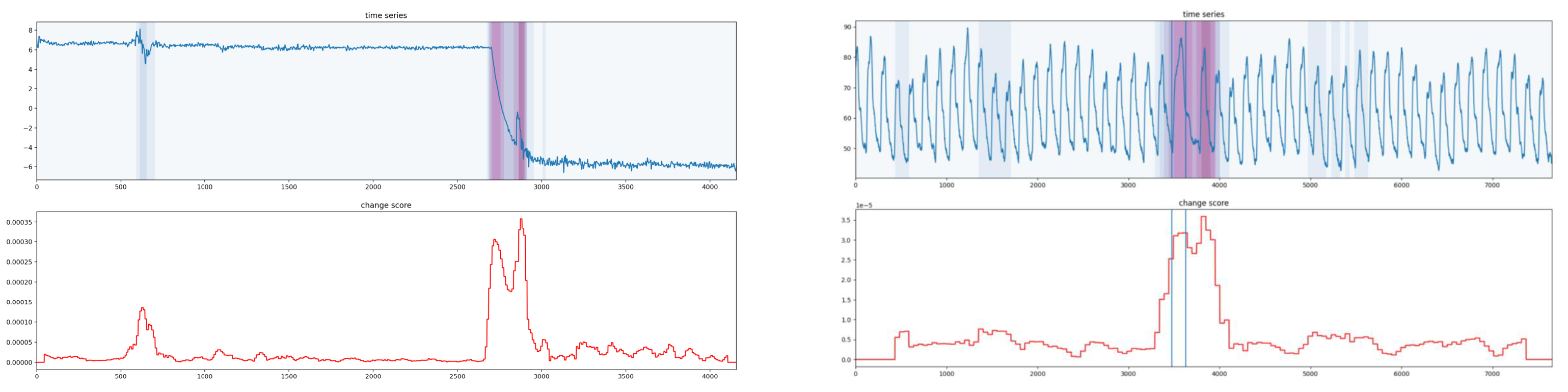
Example for Change Point Detection using the Changepoynt Package:
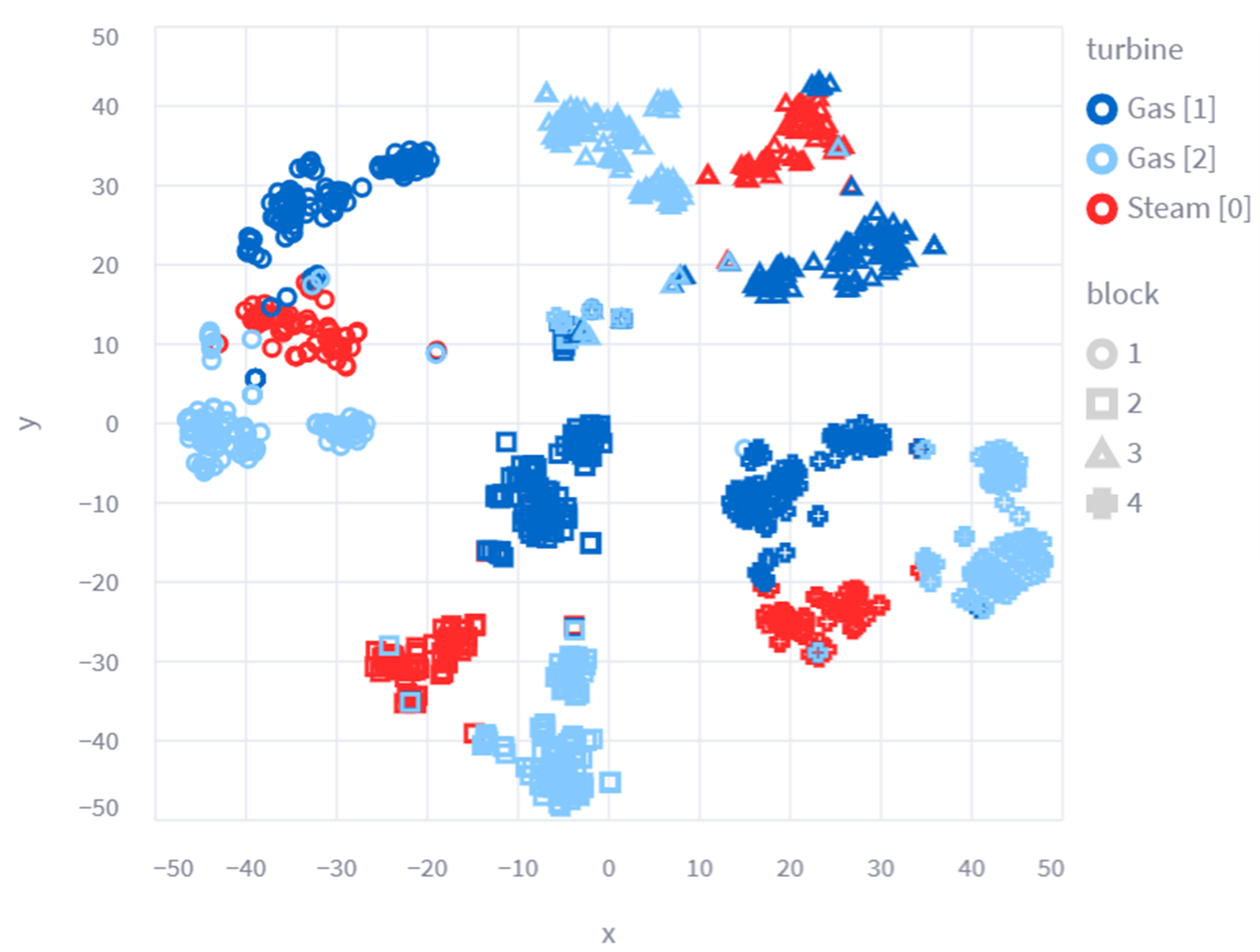
Signal Clustered by their Relationship within a power plant:
Teaching
I tutor for the Knowledge Discovery in Databases (KDD) lecture. Contact me if you have any questions regarding the exercise.
Open Topics
There are always several available topics for interested students and interested third parties. You can find the open topics at our chair listed under: https://www.studon.fau.de/cat5492144.html
If you are on this page and have open topics related in any way to the fields listed above, get in contact using any of the contact information listed above. I would love to hear from you.
Send me an E-Mail for more information about the topics. I'm also often looking for (paid) student assistants. Other topics can always be discussed.
Unfortunately, I have received a lot of very generic emails. While I understand your thesis is important to you, I would appreciate it, if you tailor the mail to the chosen topic. Thank you!
Miscellaneous
I'm also a tutor for the Exercise in Knowledge Discovery in Databases held in the summer semester. If you have any questions regarding the exercise, also get in contact with me.
Additionally, I'm always interested in sensor time series data sets. If you have open topics in the direction of pattern recognition and machine learning on sensor data, get in touch. I enjoy working with this data a lot.